Beyond Mutations and The Fifth Percent
Artist: Angela McQuillan
Researcher: Eileen Workman
Science Subject: Gene Therapy

Beyond Mutations
Mixed Media (ceramic, fibers, glass)
2026
Beyond Mutations explores one of the most profound shifts in modern medicine: the possibility of addressing disease at its genetic source rather than simply managing symptoms. Through mixed media, organic forms, and material metaphor, the installation examines disease, healing, regeneration, and the body’s remarkable capacity for repair. It considers how inherited challenges can shape our lives while also pointing toward emerging possibilities for intervention, adaptation, and change.
At its core, the work explores the tension between vulnerability and resilience. Drawing inspiration from developmental biology, microscopy, and the hidden architecture of the human body, the installation invites viewers to consider the invisible processes that sustain life, the interconnected nature of biological systems, and the potential of science to alter the trajectory of disease.
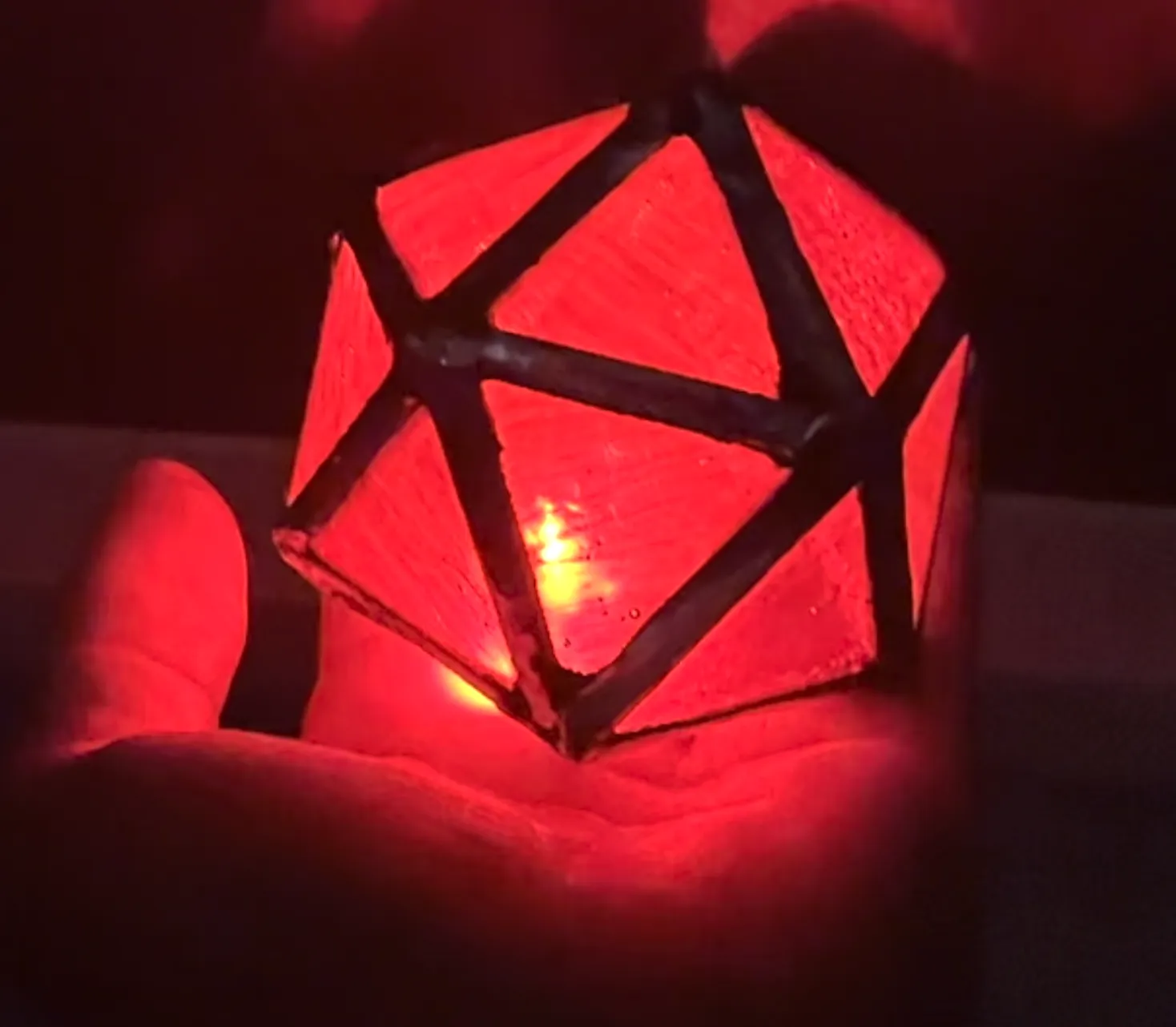
The contrast between ceramic, fiber, thread, and stained glass reflects a delicate balance between fragility and strength. Thread becomes a metaphor for genetic communication and inheritance, while stained glass transforms an invisible biological process into a luminous expression of possibility.
Rather than presenting genetics through a clinical lens, Beyond Mutations uses abstraction and metaphor to emphasize hope, regeneration, and the enduring capacity for growth in the face of adversity. Ultimately, the work suggests that healing is not simply the correction of a mutation, but the restoration of the body’s ability to grow, adapt, and thrive.
The Fifth Percent
Mixed Media (ceramic, fibers, glass)
2026
The Fifth Percent visualizes one of the most striking realities of rare disease research: although more than 10,000 rare diseases have been identified, fewer than 5% currently have an approved treatment.
The installation consists of 100 small, hand-built organic ceramic forms arranged in a grid of ten rows by ten columns, each representing a rare genetic disease. Ninety-five are finished in a minimal white glaze, representing the overwhelming majority of rare diseases that remain without effective therapies. The remaining five are glazed in red, standing out as symbols of hope, scientific progress, and the transformative potential of gene therapy.
The work makes visible the profound imbalance between treated and untreated rare diseases at an important moment in biomedical research. Advances in gene therapy have created unprecedented opportunities to treat diseases once considered incurable, yet bringing those discoveries from the laboratory to patients depends on sustained research, funding, collaboration, and clinical development.
The piece also reflects the uncertainty facing today’s research environment, including reductions in federal research funding and policy changes that can slow scientific progress and the development of new therapies. In response, researchers increasingly rely on broader collaborations, including international partnerships and clinical trials, to continue advancing promising treatments.
Through repetition, scale, and contrast, The Fifth Percent asks viewers to confront both the extraordinary promise of genetic medicine and the enormous unmet need that remains for people living with rare disease.
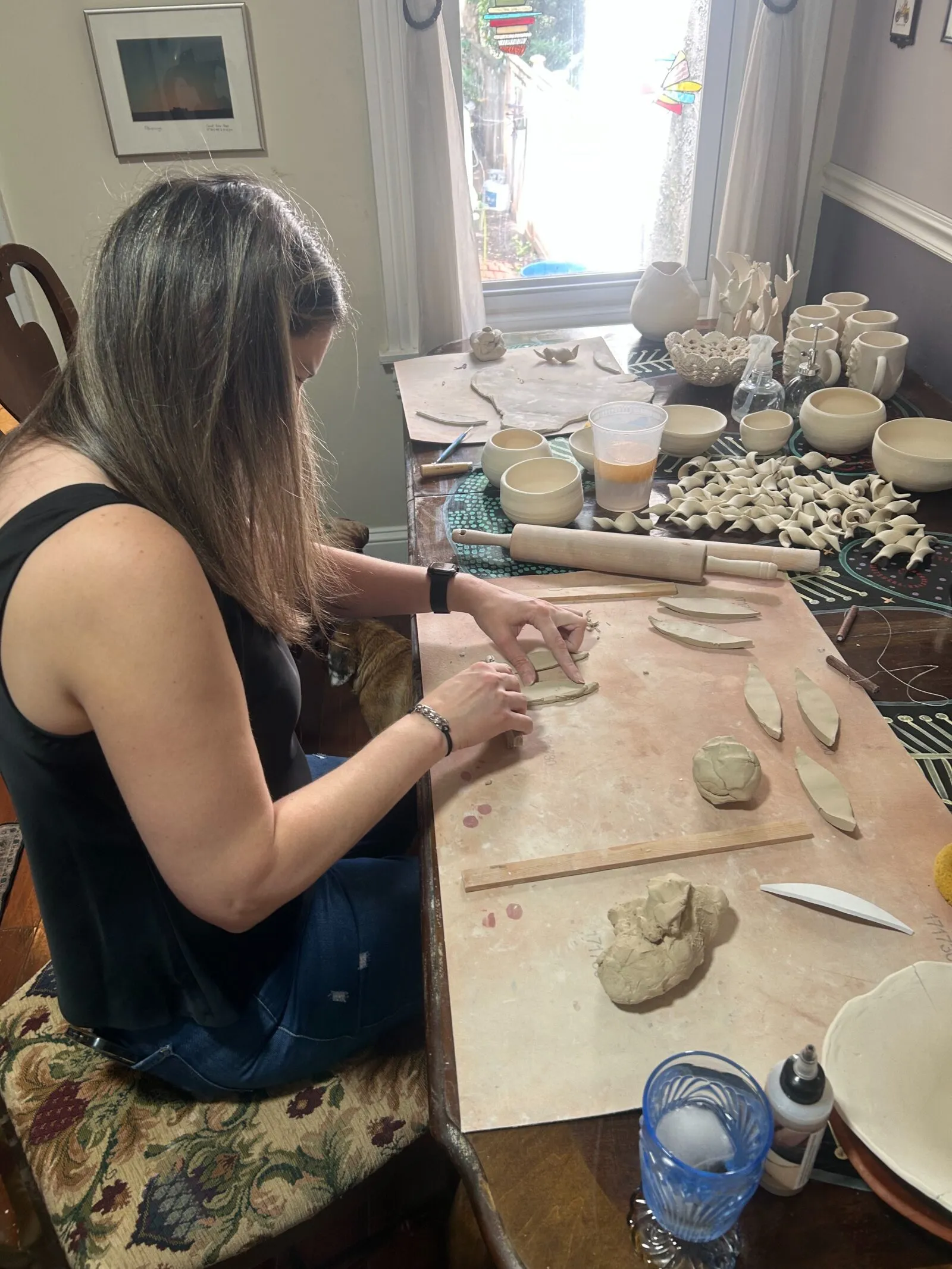
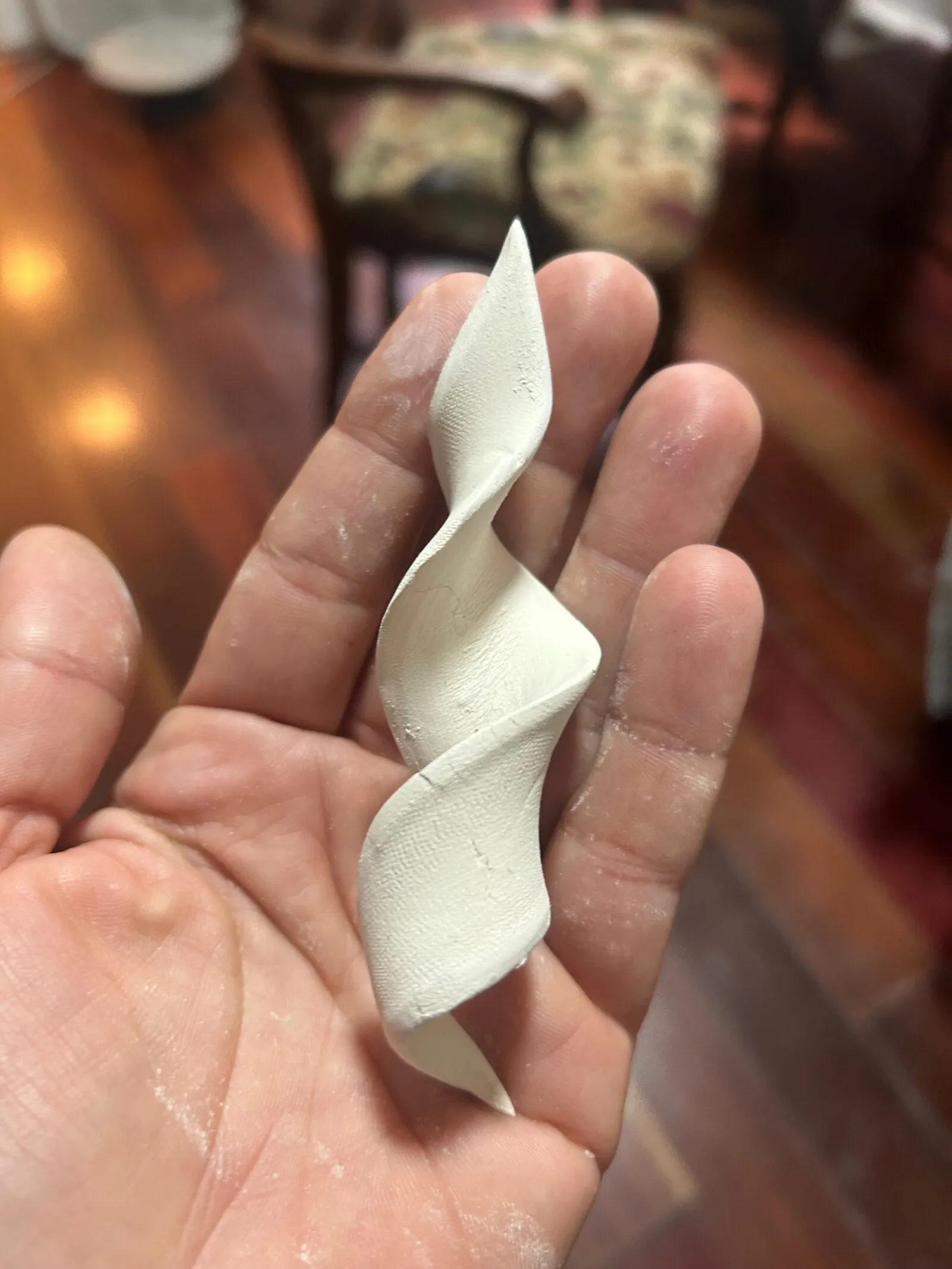
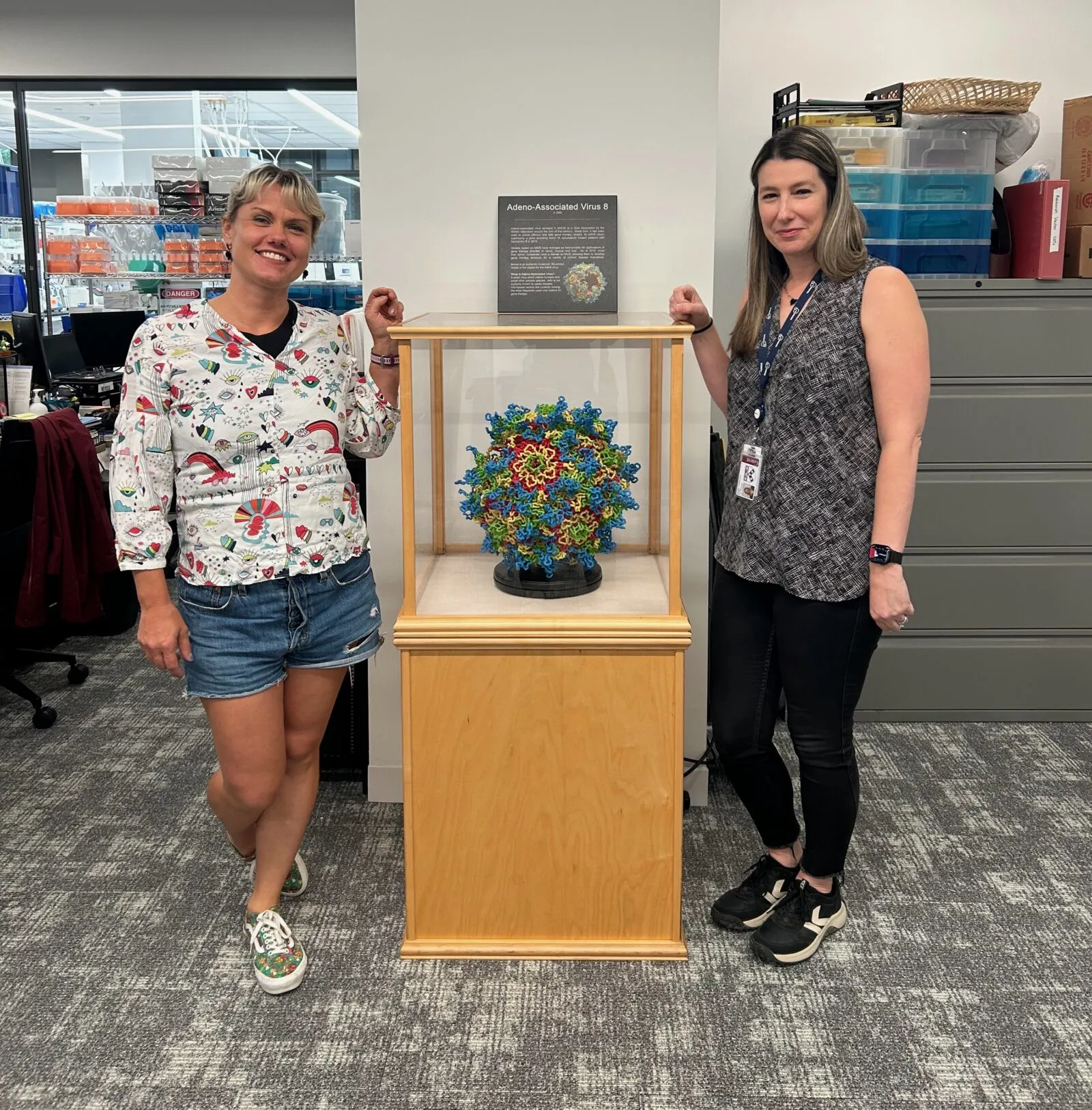
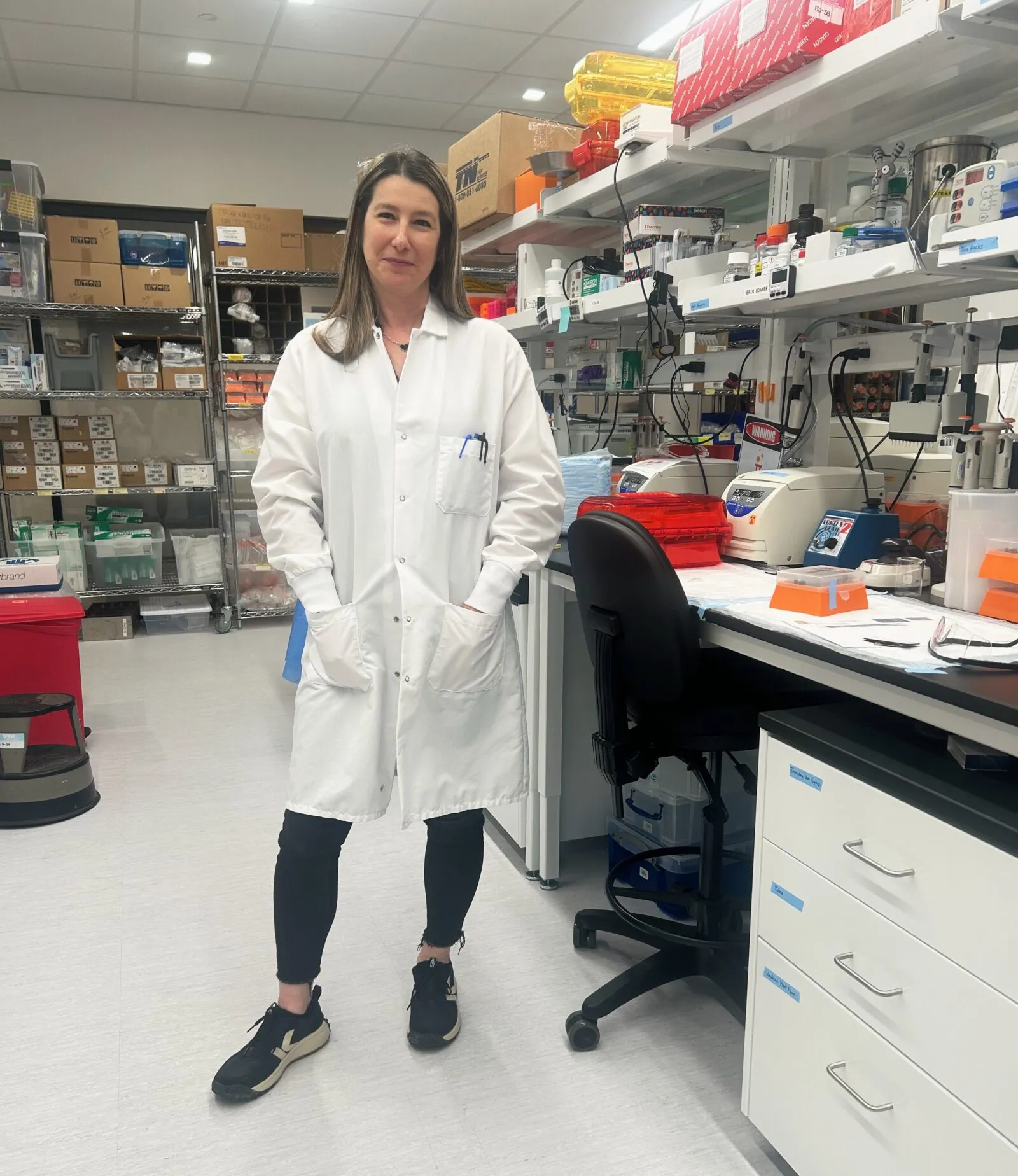
Angela and Eileen’s collaboration began with conversations about Eileen’s research, giving Angela an opportunity to ask questions and better understand the science behind gene therapy. From there, Angela developed early concepts digitally and shared them with Eileen, whose feedback helped shape both the direction of the work and the scientific accuracy of its forms and ideas.
As the project progressed, the exchange moved beyond conversation and into one another’s workspaces. Angela visited Eileen’s lab, toured the facility, spoke with members of the research team, and gained a deeper appreciation for both the complexity of the work and the passion behind it. Eileen later visited Angela’s home studio, where she learned more about the artistic process, worked with clay herself, and even helped create some of the sculptural elements included in the exhibition.
Their collaboration has continued throughout the final stages of the artwork, with ongoing feedback and shared problem-solving helping to shape the finished pieces. The process reflects a true exchange between art and science, grounded in curiosity, learning, and a shared interest in communicating the possibilities of gene therapy.

Artist: Angela McQuillan
Angela McQuillan is a Philadelphia-based artist, designer, and curator whose work explores the intersection of art, science, and technology. With degrees in Biology, Painting, and Creative Entrepreneurship, she brings a multidisciplinary perspective shaped by more than two decades of experience spanning academia, pharmaceuticals, communications, design, marketing, and arts administration.
Working across painting, sculpture, fiber, ceramics, and installation, Angela's mixed media practice examines themes of genetics, biotechnology, mental health, ecology, and transformation. Her work combines scientific inquiry with material experimentation, using organic forms and vibrant color to explore the connections between the natural world, the human body, and emerging technologies.
A former member of the Little Berlin and Grizzly Grizzly artist collectives, Angela served as Curator of the Esther Klein Gallery in Philadelphia for nine years, where she co-founded the University City Science Center BioArt Residency in 2017 and directed the program for five years. She also independently owned and operated Chimaera Gallery from 2022–2025.
Angela's curatorial projects have been supported by organizations including the Knight Foundation, the Dolfinger McMahon Foundation, the Ratcliffe Center for Creative Entrepreneurship, the Philadelphia Foundation, and The Pew Center for Arts & Heritage. She has curated more than 75 exhibitions and her artwork has been featured in The New York Times, Forbes, and SciArt in America.
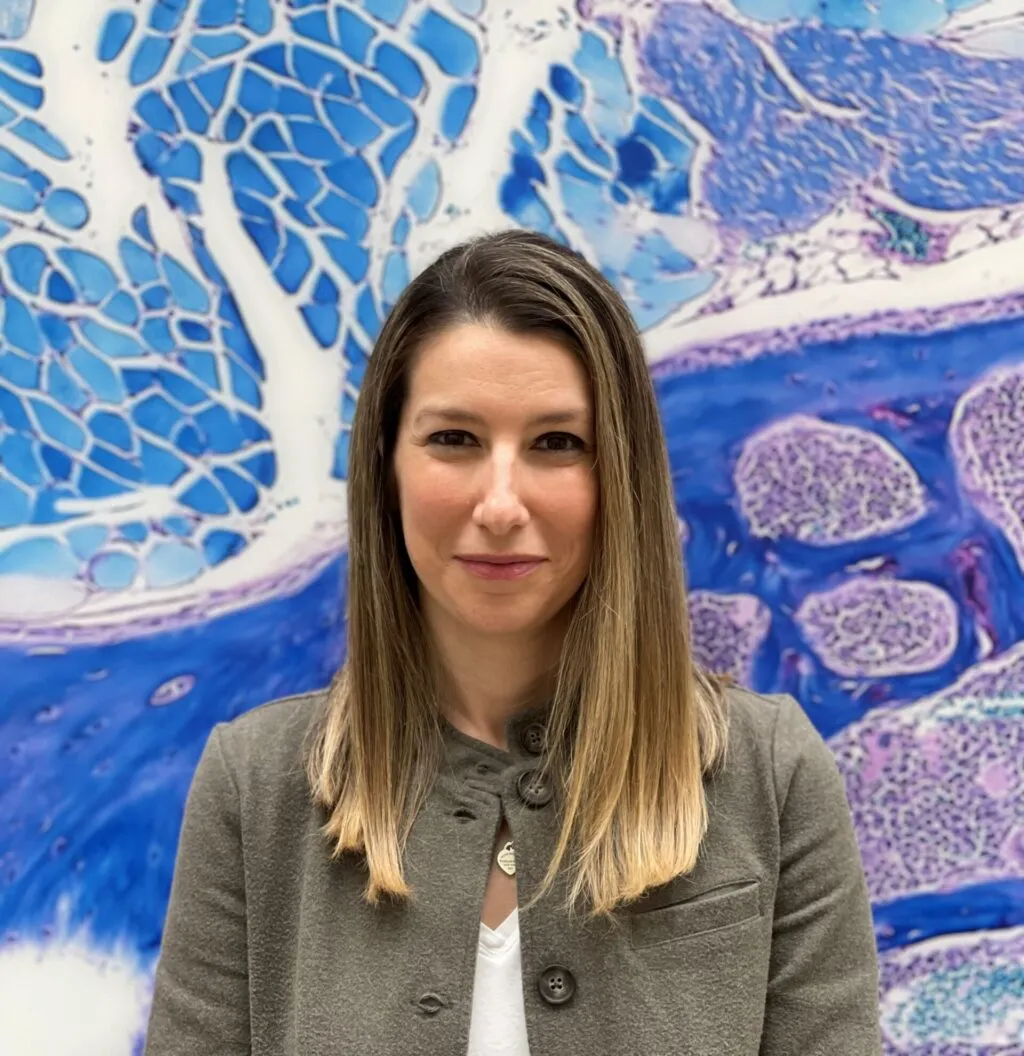
Researcher: Eileen Workman
Eileen Workman is the Executive Director of Neurology at GEMMABio, a biotech startup spun out of the University of Pennsylvania dedicated to advancing adeno-associated virus (AAV) gene therapies for rare diseases from the laboratory to the clinic. A native of Ohio, she earned a Ph.D. in Biochemistry from The Ohio State University where she got her start studying the motor neuron disease, Spinal Muscular Atrophy. Since then, she has spent nearly two decades researching rare neurological diseases at The Ohio State University, Columbia University, and the Gene Therapy Program at the University of Pennsylvania.
Eileen is driven by a commitment to translating scientific discoveries into therapies that change patients' lives. This collaboration reflects that same spirit of translation — presenting gene therapy's promise as a tool for healing through artistic interpretation. She is honored to have this opportunity to explore art as a powerful medium of scientific communication.
“This artwork reflects the personal creative interpretation of the artist, developed through collaborative conversations with a GEMMABio researcher participating in a personal capacity. It is not intended to represent, and should not be construed as representing, the scientific findings, business activities or strategy, or views of GEMMABio on any regulatory, funding, or public-policy matter.”